

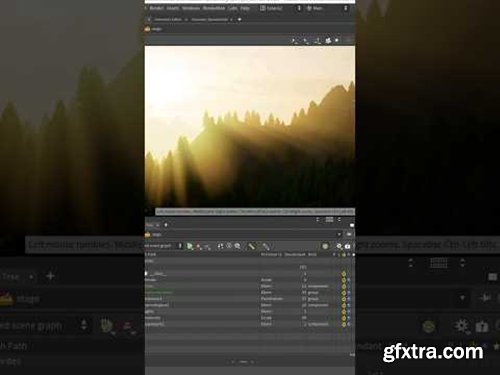
https://www.patreon.com/c/cgside/posts
Join Cgside in this step-by-step tutorial and learn how to craft breathtaking volumetric god rays using Houdini’s powerful Karma XPU renderer. This video covers everything from setting up light sources and volumetrics to fine-tuning your renders for cinematic quality. As a bonus, you’ll get access to the scene file to explore and adapt for your own projects. Perfect for 3D artists and VFX professionals, this tutorial will help you add dramatic lighting effects to your scenes. Watch now and elevate your renders!

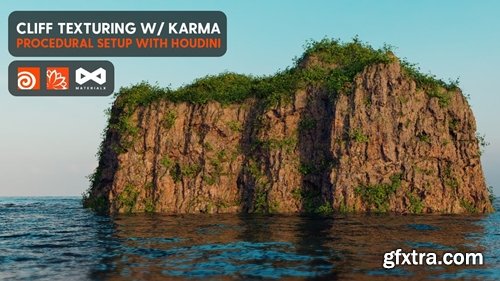
https://www.patreon.com/c/cgside/home
Dive into this advanced tutorial and learn how to create stunning, realistic cliff textures using Houdini’s Karma renderer and MaterialX. This video covers everything from setting up procedural textures and fine-tuning materials to rendering lifelike results. Perfect for environment artists, VFX professionals, and 3D enthusiasts, this tutorial will elevate your texturing skills and help you bring natural landscapes to life. Watch now and master the art of photorealistic cliff texturing!

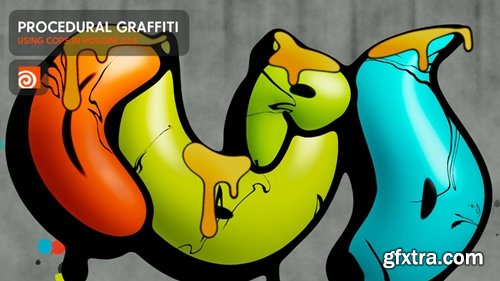
https://www.patreon.com/posts/procedural-in-124329209
Hey everyone, here's the hip from the latest video on youtube, where I will recreate my Mardini entry with the theme graffiti. This is packed with information about vex, cops, opencl and so much more. Hope you enjoy.
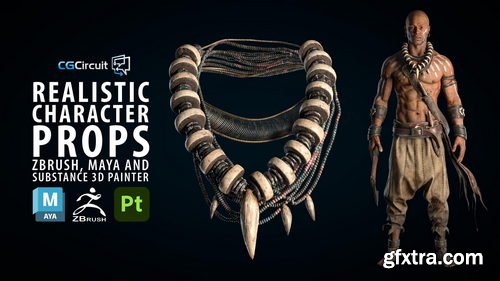
- In this online course, the viewer will learn how to create realistic props and assets ready for production using Maya, Zbrush and Substance Painter. We will go through some basics of modeling for a production environment while working on the assets. Using as an example our character from the previous courses we will create all the props and assets, we will model with proper topology, sculpt on them and texture them to get them ready to be animated and to add them in a production pipeline.
- This course has been designed for beginner and intermediate students with a passion for realism and 3D characters in general. This is the 5th of a series of tutorials where we will create a full 3D character ready for production. For this course, you will need to have a basic previous knowledge of Maya, Zbrush and Substance 3D Painter as in this course, we don't teach the software itself but the fundamentals of the creation of characters and assets and the full workflow to make it ready for production.
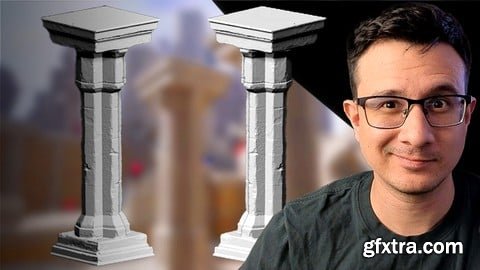
Udemy - Sculpting In Zbrush For Game Environments
https://www.udemy.com/course/sculpting-in-zbrush-for-game-environments/
https://www.rebelway.net/advanced-water-fx-houdini-course/
Water FX inside Houdini can be one of the most challenging simulation FX styles to master. In this course, Juri Bryan, a Senior FX Artist at ILM, will share his secrets for creating impressive fluid work inside Houdini.
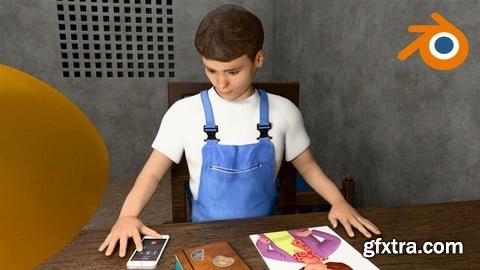
Udemy - Learn Blender 3D Character Animation – Create A Short Film
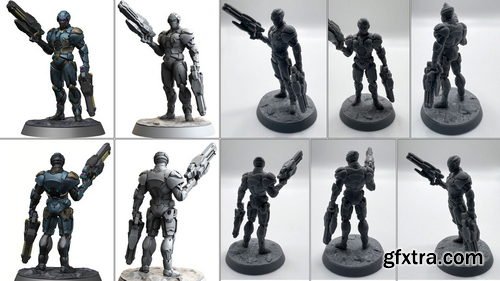
- Learn how to translate a 2D concept into a 3D miniature using ZBrush and KeyShot in this 4-hour workshop by Digital Sculptor Francesco Orru. This tutorial is intended for artists who already have some knowledge of digital sculpting in ZBrush and are ready to delve into the world of creating miniatures from concept art.
- The workshop covers the entire process of sculpting for miniatures, from considering the initial scales to using DynaMesh, ZRemesher, Transpose Master, ZModeller, and lastly, KeyShot for rendering.
- When resin printing miniatures, consideration needs to be given to the level of detail to be included in the model, which all depends on the scale, proportions, volumes, the interpretation of shapes — and you need to know which liberties you can take while sculpting.
- As well as sharing his workflow, Francesco discusses how to optimize your work to save time when sculpting, and shares his tips for developing good communication with art directors in order to receive feedback early on during the process. He talks about how to work under certain limits including time and resources, and stresses why it’s important to be open to reworking models — and never falling in love with your first attempts.
- By completing this workshop, you’ll have a solid understanding of the full pipeline when working from a 2D concept to create a 3D miniature using ZBrush. You’ll also discover how to present your work to an art director.
- The final prototype featured in this workshop was printed by Valkyrx Gaming in the UK.
- Provided as a downloadable resource with this workshop are the STL of the decimated high poly model, the ZTL of the T-pose with all the Subtools, plus the ZTL of the final posed model with Subtools.
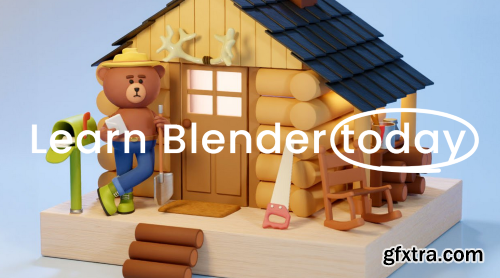
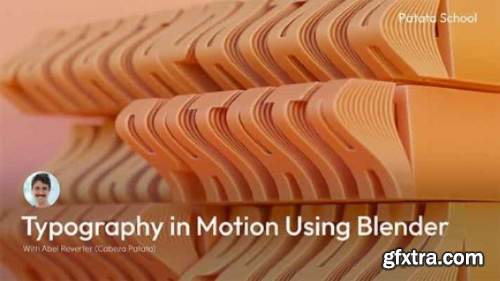
Want to create your own 3D text in motion? We go in depth to cover a range of techniques in Blender to achieve unique results, mixing classic graphic type design with a modern, illustrative flair. We'll guide you from start to final render, even with a bonus colour correction lesson, so you have incredible animations that will grab attention everywhere!
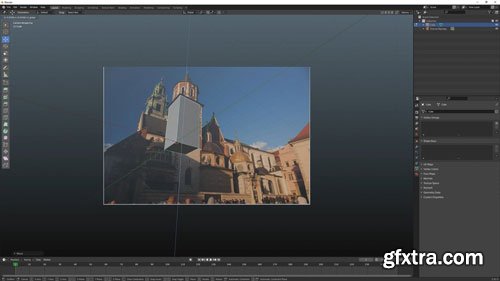
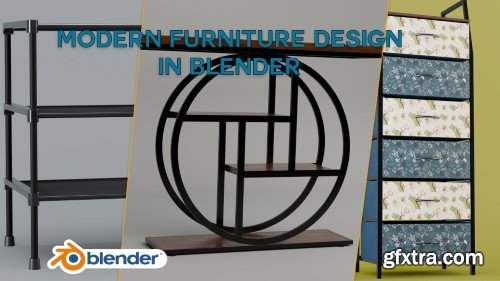
Skillshare - Modern Furniture Design in Blender 4.0
Blender is evolving day by day and has become very powerful. Its advantage is that it’s free, so you don’t have to pay a monthly subscription like other software. You can also achieve professional results with it, whether in architectural design or product design.
Hello every Designer i am kamel Altohamy ( graduated from faculty of Engineering in 2015), have experience over 7 years in the Field of Product Design.
- in the first chapter:we will model and redner Shoe pack
- in the second Chapter: will design Drawer Organzier from scratch
- in the third project: model and render Console Table that yo will not find anywhere else
- in the fourth chapter: will model shower Caddy and Soap Holder

Learn the fundamentals of creating a FPS game in Unreal Engine, with free resources and over 13 hours of tutorials!

https://www.udemy.com/course/unreal-engine-5-blueprint-scripting-build-attack-helicopter/
From Blueprint Basics to Advanced Game Mechanics: Build and Control a Combat-Ready Helicopter in Unreal Engine 5
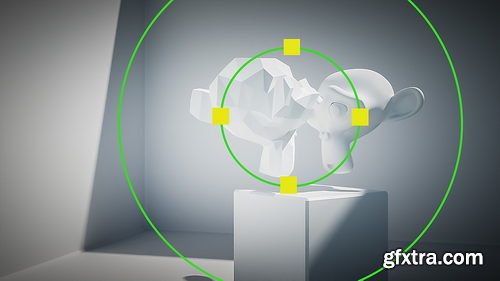
- In the same way that you can sculpt clay or wood, vignettes let you shape light and shadows. They can add depth, atmosphere, mystery, or wonder to your digital images. A vignette mimics subtle effects of human vision reproducing fall- offs in color perception and brightness around the periphery of our field of view. Technically a vignette is the actual fall-off in brightness across an image towards the edge. The darker less saturated borders drive the viewers attention back toward the focal point.
What You Will Learn
- Blender has many tools that can be enlisted in building vignette effects. In this tutorial series, we will:
- Find out how to construct vignettes in the VSE using the UV/Image editor’s mask tool.
- Learn to duplicate, animate and move the vignette around the timeline.
- Discover how to build vignettes in the compositor.
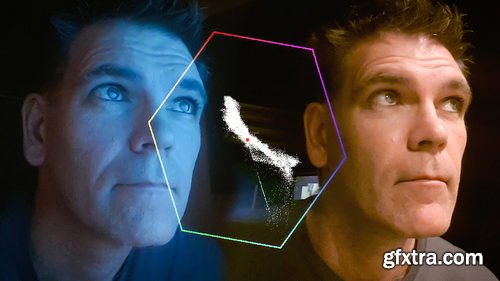
- We will look at 2 typical post-production problems: 1. In the first lesson of the tutorial we will learn to read the Waveform, Vectorscope and Histogram using a simple gradient. Then we will explore their function with a more complicated image. We’ll look at the differences between "Color Correction" and "Color Grading". 2. For the second lesson we work with mismatched shots of a human face, that has been lit very differently. Blender’s Adjustment Strips allow us to add strip modifiers like Hue Correct and Color Balance while we watch the scopes for accurate feedback. 3. Finally, we’ll load up some exterior shots that were filmed at different times of day. Using The VSE waveform scope we will check the image for clipping or loss of data in the black or white region and try to match the brightness and contrast of the other shots. Then we will use the Vectorscope to look for color bias or incorrect tint and adjust appropriately.

- Make your Cycles materials more tangible and appealing! In computer graphics, “shading” is the process of developing surface qualities for 3D models. The way your model interacts with light is very important. It’s a key step in achieving realism, tangibility, believability, and appeal.
- If you ever have doubts about this, go watch the film “Rango”. The artists responsible for the visuals in that film clearly spent a lot of time perfecting the thousands of material types throughout the movie. The tangible quality of each eyeball, rock, wood board and glass bottle is nothing short of stunning. The materials are so believable that you can forget to notice them because your brain accepts them as authentic.
- If you’re new to the concept of shading, the best place to start is to intentionally observe reality. Take note of your car’s reflections; the spotty specular quality of an asphalt road; or the frosted transparency of a condensating glass of water.
- Lucky for you and I, scientists have done the hard work of measuring reality’s phenomenon and programmers have mathematically implemented them into 3D software like Blender. Thanks to those rockstars we have the freedom to use their discoveries and tools to more efficiently create something beautiful. Speaking of something beautiful – For this course we’ll be working with the lovable “Pancake Hobo” character designed by Citizen user, Galit Weisberg!
- So, how does one “Shade”? Shading is more than simply building custom materials. Texture painting and Lighting go hand-in-hand with a material creation and all three disciplines complement one another. Therefore, the first half of this training course covers Texture Painting and associated tasks: - Photo-sourcing and stenciling - Paint-by-Hand - Deriving a bump map from a color map - Making non-tileable textures tileable
- Then we’ll dive into material creation by first establishing a solid lighting setup before tackling each material one by one: - Metallic Objects: The Fork - Fabric Material - Translucence/Subsurface Scattering: Butter, Skin, and Pancake - Transparency/Refraction: Maple Syrup - And more! CC Attribution
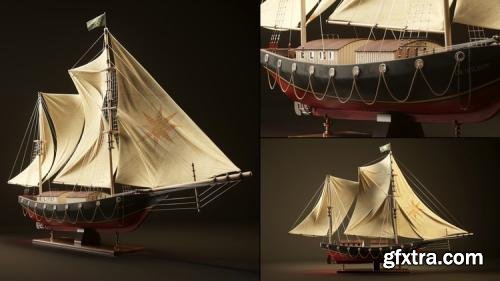
Language: English (US)
https://www.udemy.com/course/sailing-boat-tutorial-modeling-texturing-lighting/
Create a Realistic 3D Sailing Ship: Modeling, Texturing, and Rendering
126,000 Royalty-Free 3D Model
Udemy Türkçe


Top Rated News
- CreativeLive Tutorial Collections
- Fasttracktutorials Course
- Chaos Cosmos Library
- MRMockup - Mockup Bundle
- Finding North Photography
- Sean Archer
- John Gress Photography
- Motion Science
- AwTeaches
- Learn Squared
- PhotoWhoa
- Houdini-Course
- Photigy
- August Dering Photography
- StudioGuti
- Creatoom
- Creature Art Teacher
- Creator Foundry
- Patreon Collections
- Udemy - Turkce
- BigFilms
- Jerry Ghionis
- ACIDBITE
- BigMediumSmall
- Globe Plants
- Unleashed Education
- The School of Photography
- Visual Education
- LeartesStudios - Cosmos
- Fxphd
- All Veer Fancy Collection!
- All OJO Images
- All ZZVe Vectors
- CGTrader 1 CGTrader 2



















