

Want to change your composition? Want to add more space to your photo? Look no further than the Crop Tool!
In this tutorial, learn the many uses of the Crop Tool and how to make sure you don’t accidentally delete any important information from your images.



From SKETCH to SHEETS - Learn Rhino 3D from scratch, structured arround a core project that we will build together

- Entirely in Redshift 3.5 and C4D R26 + 2023 Learn how to optimize and speed up your renders on your machine and how to make them clean at the same time! In depth look at Rendering with Redshift. Learn Lighting options, tips, tricks, settings, controls! Master the camera in C4D and use RS Bokeh to make depth of field and cinematic renders as well as motion blur and more. What will I learn in this course? We cover optimizing rendering for your machine, creating professional lighting, and camera settings. By the end of this course you’ll be able to create amazing looking renders that are both fast and clean! Does the course cover creating the shots in the promo video? Yes, what you see in the promo is taken straight from the course! What knowledge do I need to complete the course? A basic level of Cinema 4D should be fine for this course. What software do I need? You need Maxon Cinema 4D (many of the techniques are achievable in older versions but Version 20 and above is recommended). You also need the Redshift Render Plugin for Cinema 4D, Redshift Version 3.0 and up. 3.5 recommended.
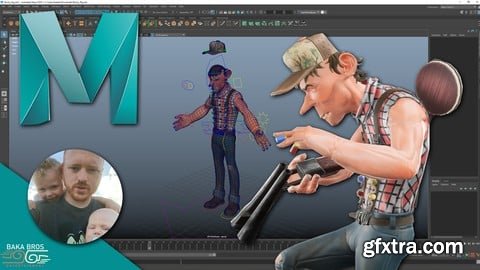
Udemy - Rigging 101 for Game Characters | Maya

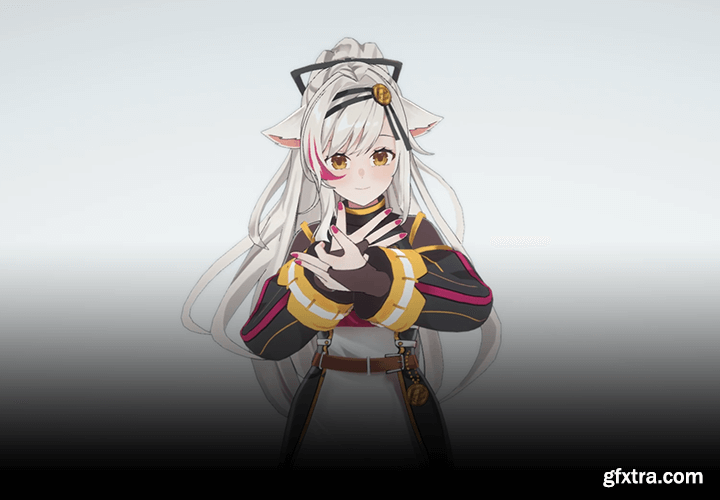
MP4 | Video: H264 1920x1080 | Audio: AAC 44100Hz 2 Ch
Language: English | Duration: 26 videos, 27Hours 42Minutes | Size: 10.2 GB
https://coloso.global/en/products/3dcharacterartist-ruiricia-us
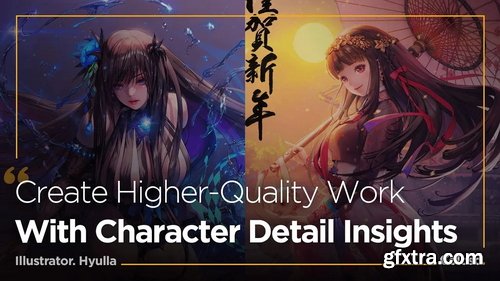
- People who dream of becoming an illustrator worry about the charm and the direction of their own drawing as they build experience and approach practical work level.
- This class focuses on helping you master key concepts like 3D forms, perspective, lighting, and color theory from a visual perspective. It also covers how to convey motion and emotion through different body parts, along with the instructor's unique approach to detailing.
- By following a step-by-step curriculum, you'll be able to create high-quality illustrations, with lifetime access to the materials for continued learning.
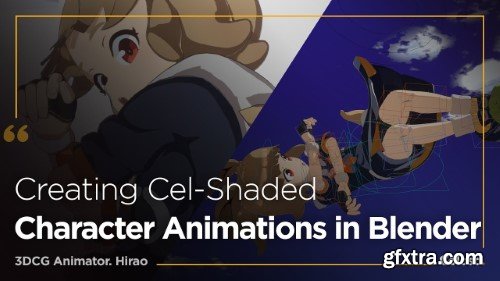
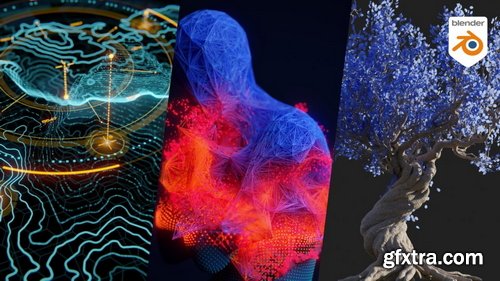
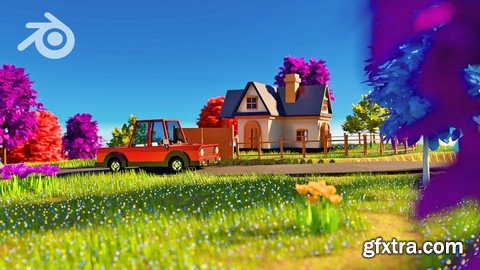
- Blender rencently added a brand new procedural system to its feature set: Geometry Nodes. While being quite powerful it’s not necessarily easily accessible, especially if you are new to procedural workflows. So we decided to cover this system in depth with a new patreon course. In this course Manuel starts from the very beginning and explains how Geometry Nodes ties into Blender, how it handles geometric data and how the different classes of nodes work. Join Manuel on this journey and learn with straightforward consecutive lessons how you can use the powerful new procedural features to enhance your workflow and manage complex setups easily.
- New episodes are added to the course on a regular basis. The episodes are short and easy to follow. Large setups are split into managable chunks. Necessary math and algorithmic concepts are explained when they are needed for the setup.
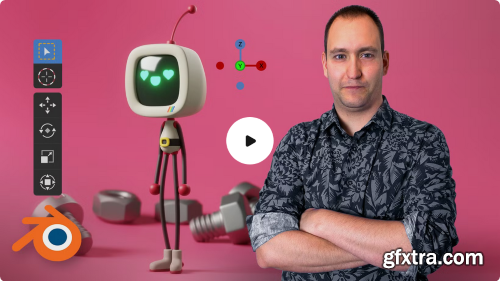
Learn to use basic sculpting, modeling, and rendering tools in Blender
So you've dreamed up a character and sketched out your idea, but it's not brimming with life the way you envisioned. How can you make your character leap off the page with unimaginable depth and realism? In this course, 3D character artist Luis Arizaga—director of the film Holymonks and collaborator for the Goya-winning short Alike—teaches you how to use Blender to model, animate, light, and render characters as lively as the ones running through your mind. Learn to use essential features like modeling and sculpting tools, node systems, light sources, rendering engines, and cameras to create foundational structures with basic objects and build your own character down to the final details.
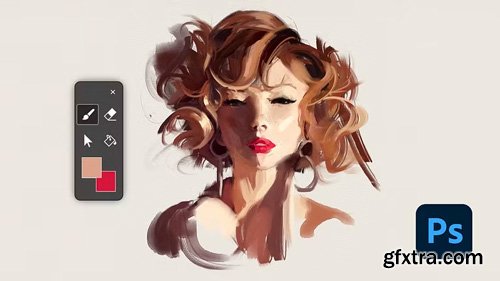
Domestika - Guided Project: Create Traditional Style Digital Portraits in Photoshop
https://www.domestika.org/en/courses/5717-guided-project-create-traditional-style-digital-portraits-in-photoshop
Audio: English | Subtitles: English · Spanish · Portuguese · German · French · Italian · Polish · Dutch
- Discover the artistry of creating digital portraits with a traditional flair using Photoshop. Learn to seamlessly blend traditional painting techniques with digital tools to produce expressive artwork that mimics the charm and depth of handmade pieces. Begin by mastering warm-up exercises that set the foundation for your creative journey. Progress to capturing the essence of a portrait, focusing on big shapes to establish composition and form. Explore the intricacies of establishing values, ensuring your artwork captures the right balance and contrast to bring your subject to life.
- Dive deeper into the details that define a portrait, honing in on the eyes, nose, and mouth to give your artwork character and emotion. The journey doesn't end there; refine your piece further, adding layers of detail and texture to achieve a polished, professional result. This guided project not only enhances your digital painting skills but also serves as a unique way to connect with your creative self and the world around you. Embrace this opportunity to expand your artistic repertoire and transform your digital canvas into a masterpiece that feels truly personal and handcrafted.
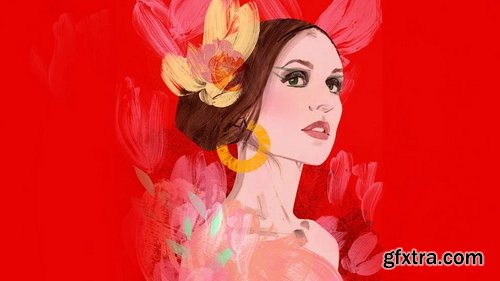
- Explore the art of transforming photographs into creative acrylic portraits through unique techniques like image transfer and frisket film masking. Start by selecting a photographic reference and learn how to creatively translate it into your own artistic style. Frisket film will help you generate striking contrasts, while layers of black paint will allow you to play with light and shadow, adding depth to your portrait. This guided project encourages you to experiment with textures and incorporate graphic elements, making your artwork truly stand out.
- Whether you're drawn to high-contrast cinematic styles or prefer abstract compositions with geometric shapes, this project allows you to explore various creative approaches. Choose to add illustrative details or even integrate digital techniques to elevate your composition. The focus is on discovering new ways to express yourself through acrylics and expanding your artistic repertoire. Embrace the challenge, let your creativity flow, and watch as your portrait comes to life with your personal touch.
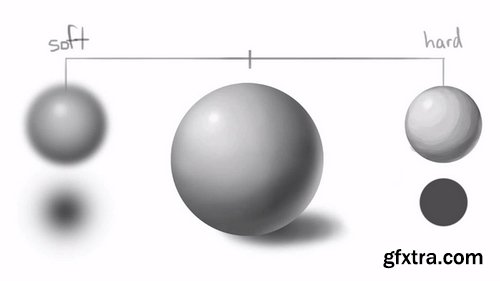
- Everything you create as an artist can be broken down into a shape or a form. There are four basic shapes which can be turned into forms when depth is added, creating an illusion of a three-dimensional object. Once you know the four basic forms, you can practice the analyzing and breaking complex objects down into these forms. This is incredibly valuable and you will later use this skill to understand lighting and shading.
- Shape language is another important aspect of digital painting and it can reveal a lot about your subject. In character design, a whole personality can be defined by shape alone. Next, we take a look at contrast, one of the most important aspects in digital art. Determined by the difference in color and brightness of an object, contrast can be soft or hard depending on which brushes you use. Artists usually aim for a balance to create a realistic look.
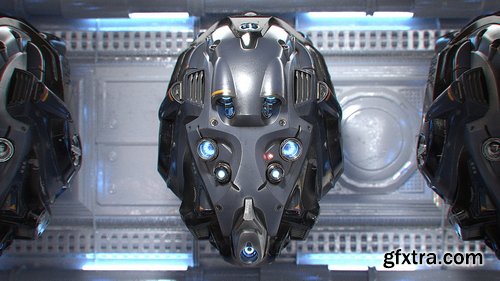
- Much like wrapping paper is to a gift, UVs are to a 3D model. In order to paint textures, UVs must be laid out flat. And ideally the result will be most efficient in favor of texel density – which is the amount of texture resolution applied to a models UVs. We will make use of the Texture Atlas Addon to consolidate our separate objects’ UVs into a single UV space.
- Blender’s painting system enables us to paint directly onto a 3D model, which is often desired over the traditional 2D-texture painting workflow (which Blender also features). We will employ these tools to paint base color, decals, and emission texture maps
- Lighting utilities like ambient occlusion and cavity maps (dirty vertex) can be baked onto the UVs of an object as supplemental textures. In this course we will bake out several maps to aid the worn and torn elements of the helmet materials.
- This is the meat and potatoes of the course. Here we dive deep into Blender’s Cycles shading nodes to construct complex yet flexible materials that will capture the tangibility of realistic surfaces. We will explore 3 variations of metal – painted, tinted, and bare – complete with intricate wear and dust components. Other material types include leather, LED emission, and lens glass.

Skillshare - Design Books in Adobe InDesign like a Pro
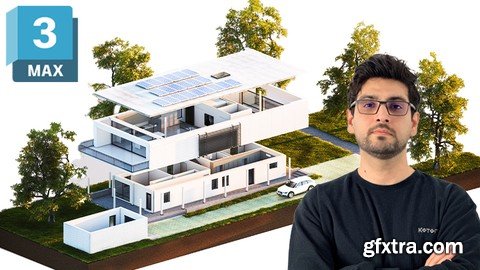
Language: English | Duration: 36 Lectures ( 10h 36m ) | Size: 7.14 GB
https://www.udemy.com/course/3dmodeling-in-3dsmax-from-zero/
Master Architectural 3D Modeling in 3ds Max – From Basic to Pro, Learn Splines, Edit Poly, Modifiers & Villa Modeling
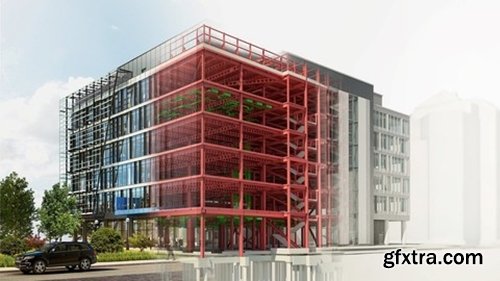
Genre: eLearning | Language: English | Duration: 12 Lectures ( 1h 21m ) | Size: 1.3 GB
https://www.udemy.com/course/bim-coordinator-bim-consultant-review-navisworks/
Learn How to Review the BIM Model, how to be Consultant Reviewer, Learn Navigation & Clash Detection in Navisworks
126,000 Royalty-Free 3D Model
Udemy Türkçe


Top Rated News
- CreativeLive Tutorial Collections
- Fasttracktutorials Course
- Chaos Cosmos Library
- MRMockup - Mockup Bundle
- Finding North Photography
- Sean Archer
- John Gress Photography
- Motion Science
- AwTeaches
- Learn Squared
- PhotoWhoa
- Houdini-Course
- Photigy
- August Dering Photography
- StudioGuti
- Creatoom
- Creature Art Teacher
- Creator Foundry
- Patreon Collections
- Udemy - Turkce
- BigFilms
- Jerry Ghionis
- ACIDBITE
- BigMediumSmall
- Globe Plants
- Unleashed Education
- The School of Photography
- Visual Education
- LeartesStudios - Cosmos
- Fxphd
- All Veer Fancy Collection!
- All OJO Images
- All ZZVe Vectors
- CGTrader 1 CGTrader 2



















